
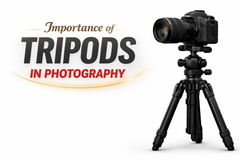

Photography is all about capturing the perfect moment with clarity, creativity, and precision. While cameras and lenses often get most of the attention, a tripod is one of the most important accessories for any photographer. Whether you are a beginner, hobbyist, or professional, a tripod can significantly improve the quality of your photos. It helps keep the camera steady, reduces blur, improves composition, and allows photographers to shoot in situations where handholding the camera would be difficult. From landscape photography to low-light shooting, wildlife photography, product photography, and video recording, tripods play a major role in achieving professional results. Investing in a good tripod can make a huge difference in both image quality and the overall photography experience.
Key Benefits of Using a Tripod
- Provides better camera stability
- Reduces blurry images caused by shaky hands
- Improves sharpness in low-light photography
- Helps in long exposure photography
- Makes landscape photography easier
- Useful for group photos and self-portraits
- Allows better framing and composition
- Essential for product photography and videography
- Reduces photographer fatigue during long shoots
- Helps achieve consistent results in professional work
1. Improved Stability and Sharper Images
One of the main reasons photographers use a tripod is to keep the camera stable. Even the slightest movement of your hands can cause blur, especially when shooting with slower shutter speeds. A tripod eliminates this problem by keeping the camera firmly in place. This is particularly useful when shooting at night, indoors, or in low-light conditions where longer exposures are required.
Sharper images are especially important for professional photography, where every detail matters. A stable tripod allows photographers to capture crisp and clear photos without worrying about motion blur. Whether you are taking pictures of landscapes, architecture, or products, the added stability can make a noticeable difference in image quality.
2. Better Performance in Low-Light Photography
Low-light photography often requires slower shutter speeds to allow more light into the camera sensor. However, slower shutter speeds make it difficult to hold the camera steady by hand. This is where a tripod becomes essential.
With a tripod, photographers can take long exposure shots without introducing blur. It allows you to capture beautiful night scenes, city lights, indoor events, sunsets, and star trails with much better detail and sharpness. Many photographers also use tripods for astrophotography, where exposures can last several seconds or even minutes.
A tripod also makes it easier to use lower ISO settings in dark environments. Lower ISO settings reduce image noise, resulting in cleaner and more professional-looking photos.